




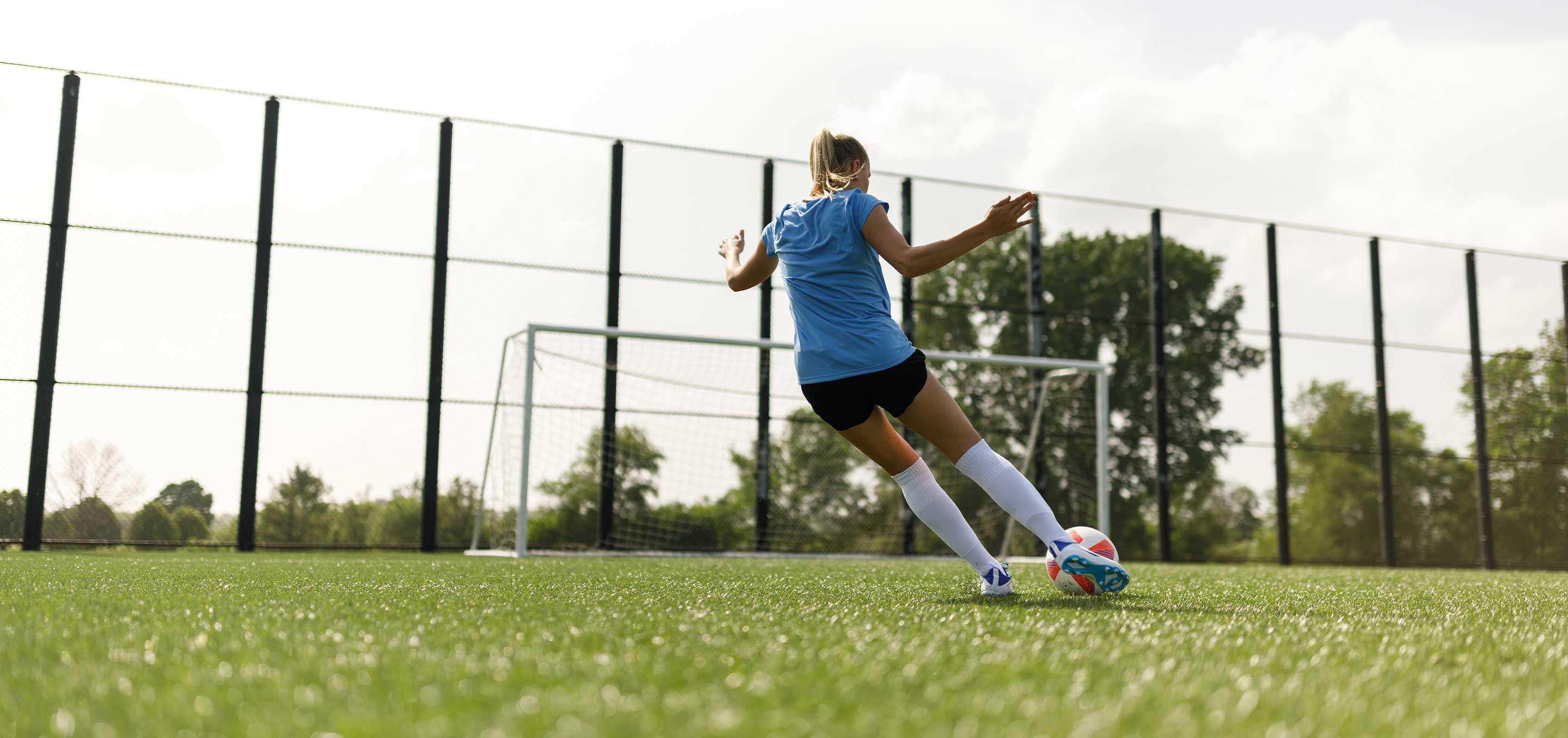



What is the Difference Between Soccer and Football Cleats?
At a glance, soccer cleats and football cleats may look similar. Both are designed for field sports, both use studs for traction, and both are built to handle speed and quick direction changes. But once you look closer, the differences become clear—and choosing the wrong cleat for your sport can affect performance, comfort, and even safety.
The Quick Answer: Soccer vs Football Cleats
Soccer cleats are lightweight, low-cut, and designed to enhance ball control and agility. Football cleats often feature higher ankle cuts, added cushioning, and a toe spike for explosive traction from a static position.
In short:
- Soccer cleats prioritize mobility and ball touch.
- Football cleats prioritize stability, protection, and power.
Key Differences Between Soccer and Football Cleats
While both types of cleats provide traction on grass or turf, their design reflects the demands of each sport.
Purpose & Movement Demands
Soccer is a continuous-flow sport. Players are constantly running, cutting, and controlling the ball with their feet. Cleats must allow natural ankle motion and close-to-ball contact without adding bulk.
Football involves short bursts of explosive movement, frequent contact, and blocking or tackling. Linemen need stability when driving forward, while skill players need acceleration from a stationary stance. This results in cleats built with more structure and support.
Design & Cut Height
One of the most noticeable differences is ankle height.
Soccer cleats are always low-cut.
This allows unrestricted ankle mobility for dribbling, passing, and quick pivots.
Football cleats come in low, mid, and high cuts.
Higher cuts provide added ankle support and protection during contact. Linemen often prefer mid or high cuts, while receivers and running backs may choose low cuts for speed.
Cushioning & Midsole Construction
Soccer cleats are intentionally minimalist. Most lack a traditional midsole, keeping the foot closer to the ground to enhance touch and control. This creates a lighter, more responsive feel but offers less built-in shock absorption.
Football cleats include midsoles to provide cushioning and impact protection. Given the higher collision frequency in football, this extra structure helps absorb shock during contact and quick stops.
Weight & Volume
Soccer cleats are built to be lightweight and streamlined. Manufacturers remove excess materials in the upper and midsole to keep the foot as close to the ball as possible.
Football cleats tend to have:
- More padding
- Higher volume uppers
- Reinforced quarter panels
- Additional collar cushioning
This increases weight slightly but enhances protection and stability.
Side-by-Side Comparison
| Feature | Soccer Cleats | Football Cleats |
|---|---|---|
| Cut Height | Low only | Low, mid, high |
| Toe Stud | No | Yes |
| Cushioning | Minimal | Cushioned midsole |
| Weight | Lightweight | Heavier |
| Ball Control | Optimized | Not prioritized |
| Allowed in Soccer? | Yes | No |
Can You Wear Soccer Cleats for Football?
Yes, soccer cleats can be worn for football in many leagues, particularly for skill positions like wide receivers or kickers who prioritize speed and agility. The lightweight design may feel faster and more flexible. However, soccer cleats lack the toe spike for explosive push-off, additional ankle support, and extra padding for contact.
For positions that require blocking, tackling, or heavy lateral force, football cleats are typically safer and more supportive.
Are Football Cleats Allowed in Soccer?
No. Football cleats are not permitted in organized soccer play because the toe spike presents a safety risk to other players. The added bulk and stud placement can also interfere with ball control and footwork.
Do You Need Insoles in Cleats?
Cleats, especially soccer models, are designed to be low-profile and snug. While this enhances control, it often means limited arch support and shock absorption. Over time, repeated cutting, sprinting, and pivoting can increase strain on the feet and lower legs. This is where performance insoles make a difference.
CURREX® CLEATPRO™ insoles are designed specifically for narrow-fitting cleats and spikes. Featuring Dynamic Arch Technology™, anti-slip SuperGrip, and a zero-drop design, CLEATPRO adds support without altering the intended fit of the shoe. Whether in soccer or football cleats, the added stability can help reduce foot fatigue and improve control during fast directional changes. Unlike bulky insoles, CLEATPRO wraps and locks the heel without elevating it, preserving the natural feel of your cleat.

Choosing the Right Cleat for Your Sport
Ultimately, your sport dictates your cleat choice.
Choose soccer cleats if:
- Ball control is essential
- You need unrestricted ankle mobility
- You prioritize lightweight speed
Choose football cleats if:
- You play a contact-heavy position
- You need added ankle stability
- Explosive push-off from a static stance is critical
Then, complete the setup with a performance insole that enhances support without sacrificing fit.
No matter which cleat you choose, support, stability, and fit play a major role in performance. By improving alignment and reducing slippage inside the shoe, CURREX CLEATPRO insoles help you stay locked in for faster cuts, sharper turns, and better control on the field.
Soccer Cleats vs. Football Cleats FAQs
Q: Why do football cleats have a toe spike?
A: The toe spike improves traction during forward drives and explosive push-offs, especially in blocking and sprint starts.
Q: Are soccer cleats lighter than football cleats?
A: Yes. Soccer cleats are built for endurance and constant movement, making them significantly lighter.
Q: Can insoles fit inside cleats?
A: Yes, but they must be low-profile and designed for narrow-fitting footwear. CURREX insoles are engineered specifically for cleats and spikes.
Q: Are football cleats safer than soccer cleats?
A: For contact-heavy football positions, yes. They provide more support and protection. However, they are not safe or allowed in soccer.